Insights
China Didn't Ban Firing For AI Cost-Cutting
Two Chinese rulings on staff replaced by AI were reported as a ban. A Hong Kong solicitor explains what the law really says, for law firm partners.
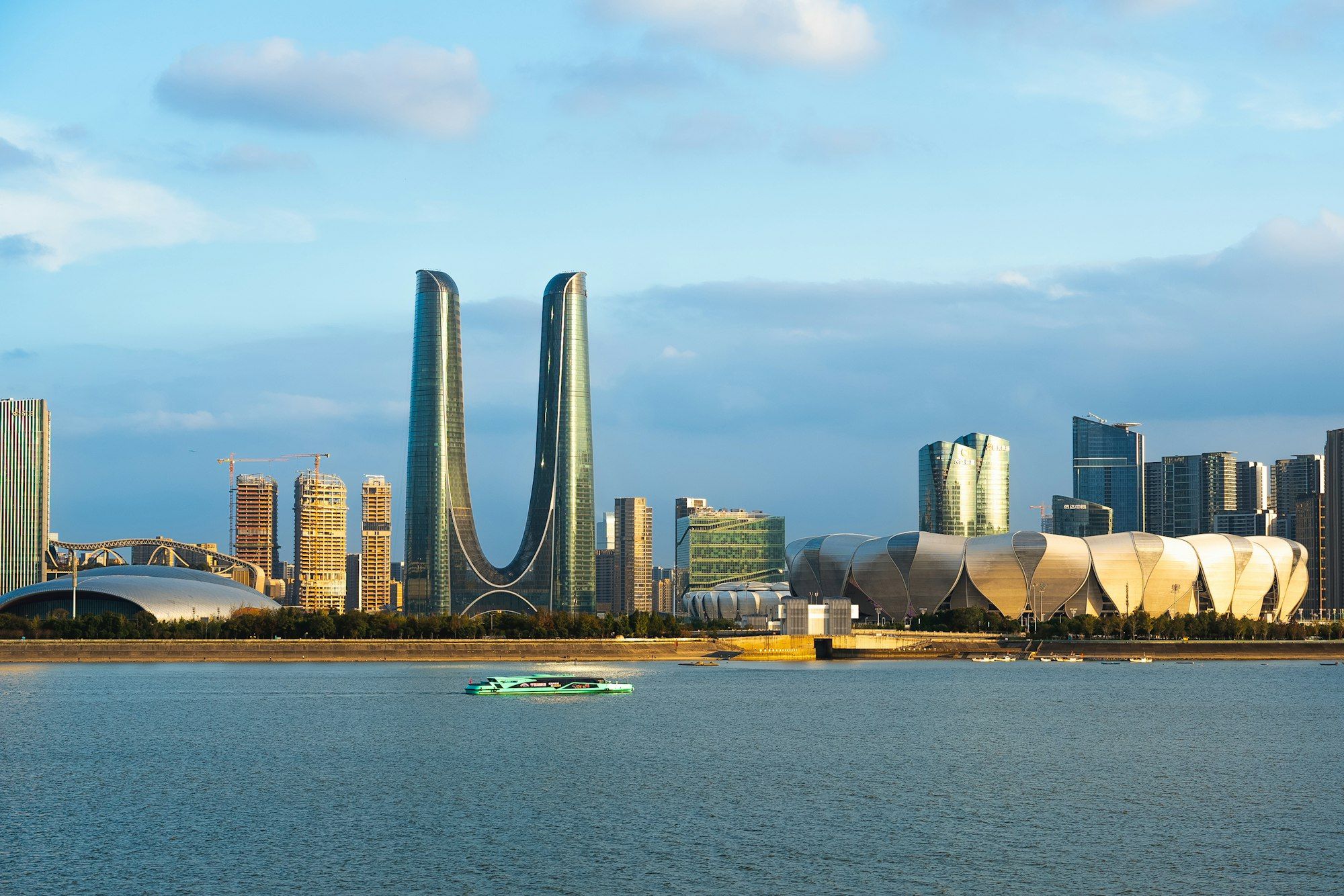
May 1st, also known as ‘May Day’ or ‘International Workers’ Day’ is one of China’s most significant public holidays and travel seasons, typically spanning 3 to 5 days of ‘Golden Week’. Only Chinese New Year (falling between January and February) and National Day (October), are comparable peak periods for tourism, leisure, and consumption.
In the last week of April, two days before May Day, the Hangzhou Intermediate People’s Court ruled that a local company could not fire one of its quality-assurance staff because AI had absorbed his job. The employer had offered the employee a roughly 40% pay cut and a demotion. The employee refused and was terminated under Article 40(3) of the Labor Contract Law. The court said that the circumstances did not amount to the requirements of Article 40(3) - objective circumstance beyond management’s control - ordered statutory damages, and published the ruling as one of its annual ‘typical cases’ on AI worker rights.1
Four months earlier a Beijing arbitration panel had reached the same conclusion with the same reasoning in a separate case of tech worker being replaced by a generative-AI workflow.2
Within hours of the Hangzhou release, the media headline machine had done its work:
“AI cost-cutting not a legal excuse to fire workers, Chinese court says” - South China Morning Post
“It’s Illegal in China to Lay Someone Off to Replace Them with AI, Court Finds” - Gizmodo
Bloomberg reported similarly.
All these readings are wrong. They are reading a routine application of a narrow statute as if it were new doctrine. This is a specific kind of mistake, and worth getting right, because every advanced economy in the world is going to run into the same fact pattern in the coming years and the framing we put on these matters travels.
What the rulings actually say
The legal basis in both cases is Article 40(3) of the PRC Labor Contract Law, the so-called ‘objective circumstances’ clause. It is one of a handful of narrow grounds on which a Chinese employer can unilaterally terminate a contract without cause.
Article 40(3) was always meant for circumstances that render the existing contract structurally unperformable, not as a general business-judgment exit. While the details are slightly more nuanced, they are also not interesting enough to expand on them here. By and large, the firing would have had to amount to a situation akin to ‘force-majeure’: an unforeseeable, unavoidable, and insurmountable circumstance.
The Beijing arbitrator put it cleanly:
“The common essence of these circumstances lies in their ‘irresistibility’ and ‘unforeseeability’ [...] Although such transformation and upgrading based on normal commercial judgment may bring changes to job structures, it does not have the features of irresistibility and unforeseeability required of ‘objective circumstances’.”
The Hangzhou court said it almost identically:
“A company’s introduction of AI technology is a technological innovation actively undertaken to adapt to market competition. Although it may bring adjustments to job structure, it does not necessarily amount to the material change in objective circumstances that renders a labor contract unperformable.”
Management chose, and therefore nothing was immutable or objective about this choice and consequently the employer cannot put forward the Article 40(3) mechanics. There is no ‘AI exception’ anywhere in the court’s assessment and the two rulings do not create one. The court very sensibly refused to recategorise the voluntary commercial decision of ‘we bought a tool’ as ‘force majeure’. The economic effect is to raise the cost of one specific kind of cheap firing, not to forbid the underlying restructuring. Where the commentary made out a ‘ban’ seeking to detect a moral story, much more dispassionately a ‘tax on the speed of automation’ was applied.
In the end, the court simply applied the statute, rather than propose a fundamental overhaul of doctrinal direction. If ‘we bought AI for this’ were enough to invoke Article 40(3), the entire architecture of Chinese labour laws would collapse, because every business decision could be relabelled as objective destiny, and every worker could be fired for cheap. The court was preserving the structure of the law it is given, nothing more.
Two ecosystem considerations
The substance and even the setting of the Hangzhou ruling are in fact rather unremarkable when you consider two aspects of Chinese reality:
The youth-unemployment macro
Circa 12.7 million graduates are expected to enter a tightening white-collar market in 2026, while March statistics put Chinese urban unemployment for the 16-24 year old cohort, excluding college students, at 16.9%. The implicit imperative of social stability on the other hand depends on putting a ceiling on that number. AI-driven white-collar displacement is the worst possible accelerant for the most exposed cohort. A ruling that raises the cost of cheap firings is a small structural brake; the publicity around it is a much bigger psychological one.
Matt Sheehan, who tracks these things carefully at Carnegie, framed it cleanly on the back of the Beijing arbitration award a few weeks before either ruling went viral:
“My guess is that the authorities see this not as a permanent solution but as a useful source of friction to slow down the transition and buy some time.”
The May Day timing
There is also the timing, and - if you know anything about China - there is nothing arbitrary or subtle about it. A pro-worker ruling, released through the typical-case channel, with a quotable judge, two days before International Workers’ Day, in an economy where youth unemployment could become a political problem is stagecraft rather than a moral victory.
The Hangzhou judge, Shi Guoqiang, possibly gave away the game when he told the state broadcaster CCTV:
“We don’t believe AI technology has reached the point where it can substantially replace human workers.”
It is worth reading this twice. The supposed pro-worker framing is being presented not as a permanent doctrine but as a contingent assessment of current capability. That is not how you cement a ban; it signals that we keep options open as the technology improves and depending on what the economic reality dictates.
No ban in sight
On this basis the ‘ban’ reading is plainly wrong. Nothing in the rulings prevent mutual-agreement separations, mass layoffs, restructuring with worker consent, or simply hiring fewer people in the first place. They prohibit one specific cheap shortcut. Every other path to AI-driven workforce reduction remains intact in China.
A comparative read is equally mundane: Japanese and Korean courts, applying a doctrine of ‘abuse of dismissal rights’, would almost certainly reach the same outcome under their existing case law, without inventing new principles. Similarly, for Europe the EU AI Act doesn’t reach this question; works councils do. The US, on the other hand, with at-will default and the WARN Act floor of fifty workers, has no similar mechanics at this time.
Bottom line: A major legal system reinterpreting ‘we bought AI’ as an unforeseeable circumstance and grounds to fire employees for cheap, would have been the actual news. What happened was the opposite.
Footnotes
-
Hangzhou Intermediate People’s Court, 28 April 2026, “Typical Cases on AI Enterprises and Worker Rights Protection” (涉人工智能企业与从业人员权益保护典型案例). Court press conference reproduced in Legal Daily (legaldaily.com.cn) and the Hangzhou municipal portal (ori.hangzhou.com.cn). English coverage: Caixin Global, 30 April 2026; SCIO, 30 April 2026. ↩
-
Beijing Labor & Personnel Dispute Arbitration Commission, Case 6 of the 2025 Top Ten Typical Cases (2025年北京市劳动人事争议仲裁十大典型案例), released by the Beijing Municipal HR & Social Security Bureau, 26 December 2025. Official release: rsj.beijing.gov.cn. ↩
First published on Substack. Read it there .